APIs you can govern and publish
WSO2 API Manager puts OAuth2 security, throttling and a developer portal in front of your services, so partners subscribe, get keys and call your APIs within limits you set.
We connect the systems you run on: WSO2 API Manager and Micro Integrator for governed APIs and orchestration, mobile money across Africa, banks with open APIs, payment gateways, core banking, Odoo and KRA eTIMS.
WSO2 API Manager puts OAuth2 security, throttling and a developer portal in front of your services, so partners subscribe, get keys and call your APIs within limits you set.
WSO2 Micro Integrator transforms messages and runs multi-step flows, so a legacy SOAP or core-banking interface can serve modern apps and partners without being rebuilt.
M-Pesa Daraja collections and payouts, other mobile money, banks with open APIs and payment gateways, built with callbacks, status checks and reconciliation from the start.
Odoo and other ERPs connected to payments, eTIMS and your other systems, so invoices, stock and receipts are never typed twice.
We have published a payment gateway's APIs through WSO2 API Manager, with a separate API for each audience and runbooks for the team that operates it.
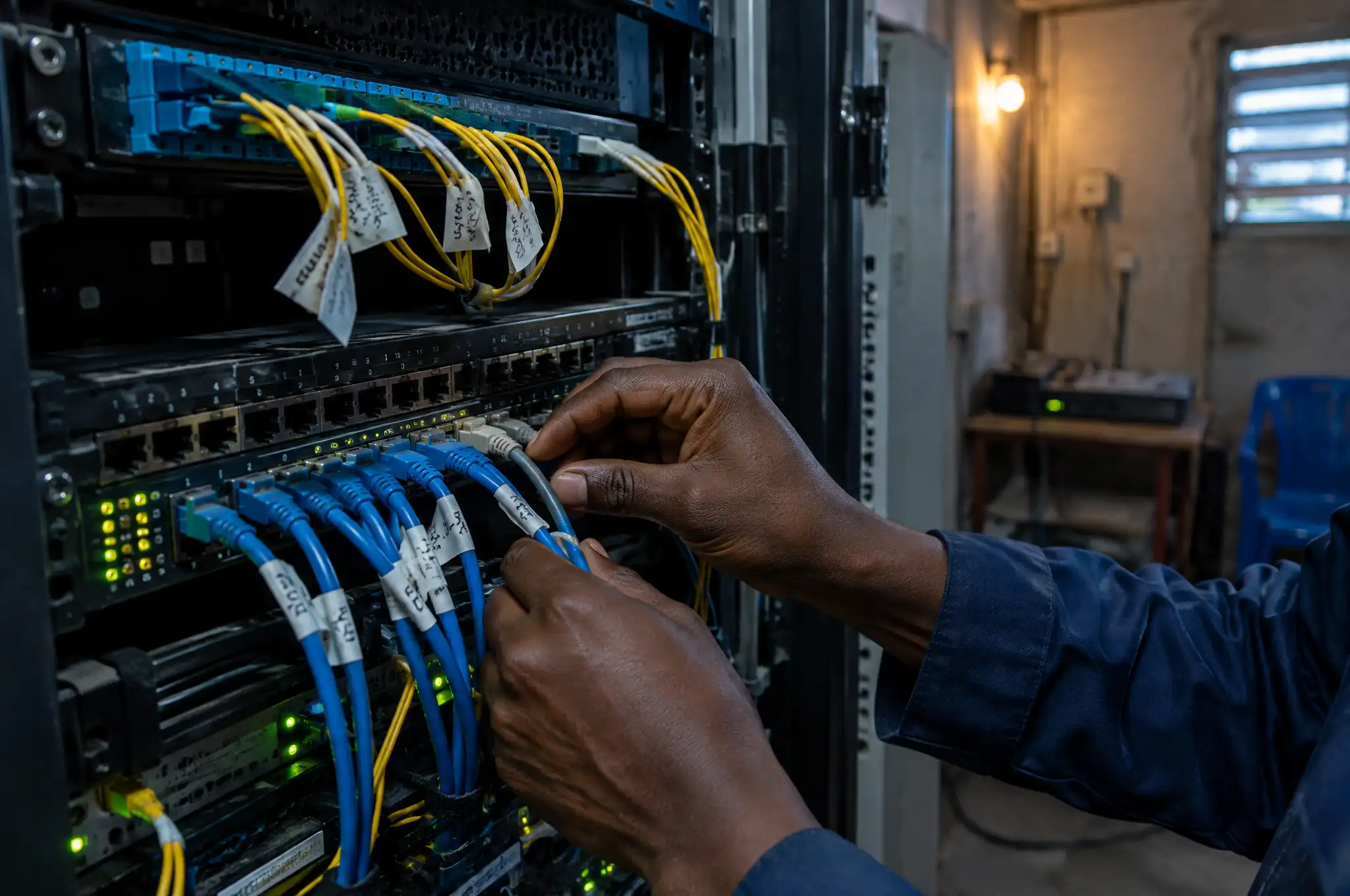
WSO2 API Manager and Micro Integrator, designed and deployed for you: secure, governed APIs for partners and apps, and orchestration across core and legacy systems.
Odoo implementation, migration and support for Kenyan businesses, with KRA eTIMS, statutory payroll, mobile money and bank feeds set up to work together from day one.
Get your Odoo ready for KRA eTIMS: invoicing set up at every branch, stock records in eTIMS, supplier invoices checked, and your finance team trained to keep it right.
WSO2 API Manager and Micro Integrator designed, deployed and configured for your APIs, partners and back-end systems, with runbooks and handover. Scoped after discovery.
Odoo implementation or migration configured for Kenya, with KRA eTIMS, statutory payroll, and mobile money and bank reconciliation set up inside the system, handed over with training.
From KES 600,000
Monthly support hours, version updates and statutory changes for KRA, SHIF, NSSF and Housing Levy, from a team that already knows your setup.
From KES 35,000/month
Most systems projects do not fail inside a system. They fail between systems: the payment that never reaches the ledger, the partner who waits months for an API, the branch whose invoices never reach KRA, the core banking interface nobody dares touch.
Integration is the work we have done since 2017, across banking, payments, ERP and identity in East Africa. It is also what makes our AI agents and fraud monitoring useful: neither is better than the data it can reach.
A gateway is only as safe as what sits behind it. When we put WSO2 API Manager in front of a service, we settle three things first:
Licensing and support subscriptions are agreed between you and WSO2. We explain the options during discovery, and the platform we build is yours.
For core banking, digital channels and eKYC, see financial technology.
Start with a free 30-minute automation audit. We look at how your team works across WhatsApp, M-Pesa and other mobile money, your bank, Odoo and eTIMS, and you leave with a one-page map of what to automate first.